Acoustic Office Design: How to Create Quieter, More Productive Workspaces
Modern offices are designed to bring people together. Open layouts, collaborative spaces, and flexible workstations encourage interaction and creativity. But they also introduce one of the biggest challenges in workplace design: noise.
From conversations across workstations to video calls and busy meeting areas, sound can quickly become a distraction. That’s why acoustic office design has become an important part of creating comfortable, functional workplaces. The good news? Improving office acoustics doesn’t have to mean sacrificing aesthetics or building more walls. Today’s acoustic solutions can bring together sound management, flexibility, and thoughtful design.

Why Office Acoustics Matter
An effective workplace needs to support different activities throughout the day, including focused work, team collaboration, meetings, and informal conversations.
Each activity has different acoustic requirements. In an open-plan office, for example, employees may need to concentrate while conversations happen nearby. Meeting rooms need speech clarity, while reception areas benefit from an inviting atmosphere where excessive echo is minimized. Without thoughtful acoustic planning, these environments can become distracting and uncomfortable. According to the U.S. General Services Administration (GSA), acoustic comfort plays an important role in reducing distractions, supporting concentration, and managing workplace stress.
Rather than eliminating sound entirely, the goal is to create a balanced acoustic environment that supports the way people use each space.
5 Ways to Improve Acoustic Design in Modern Offices
1. Turn Empty Walls into Functional Design Features
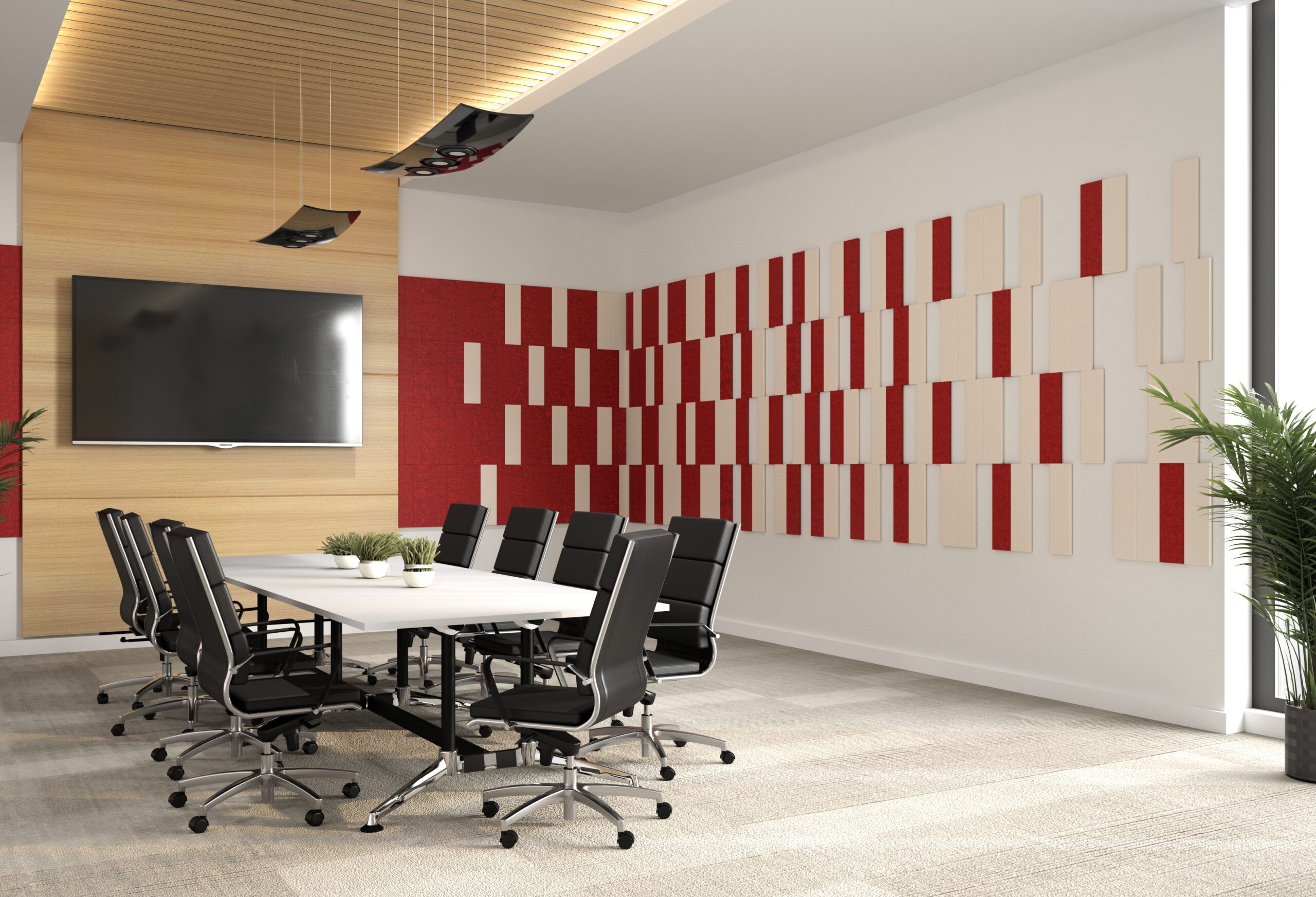
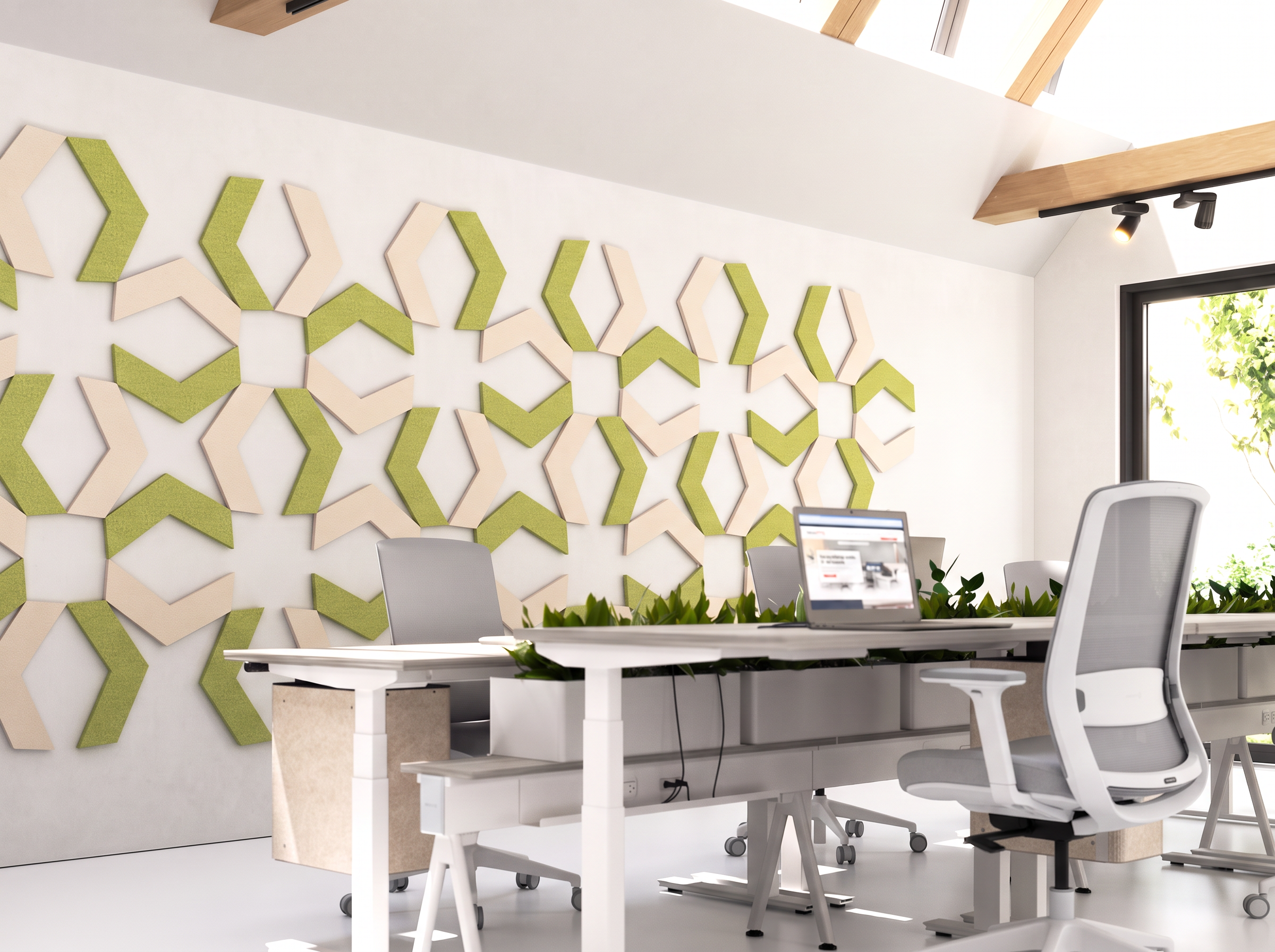
Large, hard surfaces can reflect sound and contribute to reverberation, especially in spaces with glass partitions, concrete floors, and minimal soft furnishings. Introducing acoustic wall treatments is one way to help manage reflected sound while adding texture and visual interest. Modular wall tiles also offer creative possibilities for commercial interior designers. Instead of relying on traditional artwork or painted feature walls, designers can introduce geometric patterns, contrasting colors, and dimensional arrangements.
Design inspiration: Use geometric wall tiles behind reception desks, inside meeting rooms, or across collaborative areas to create a distinctive visual statement.
Workspace48’s Versi Wall Tiles feature eight geometric shapes and eight contemporary colors, allowing designers to create customized patterns that complement their projects.
2. Introduce Hanging Panels to Define Open Spaces
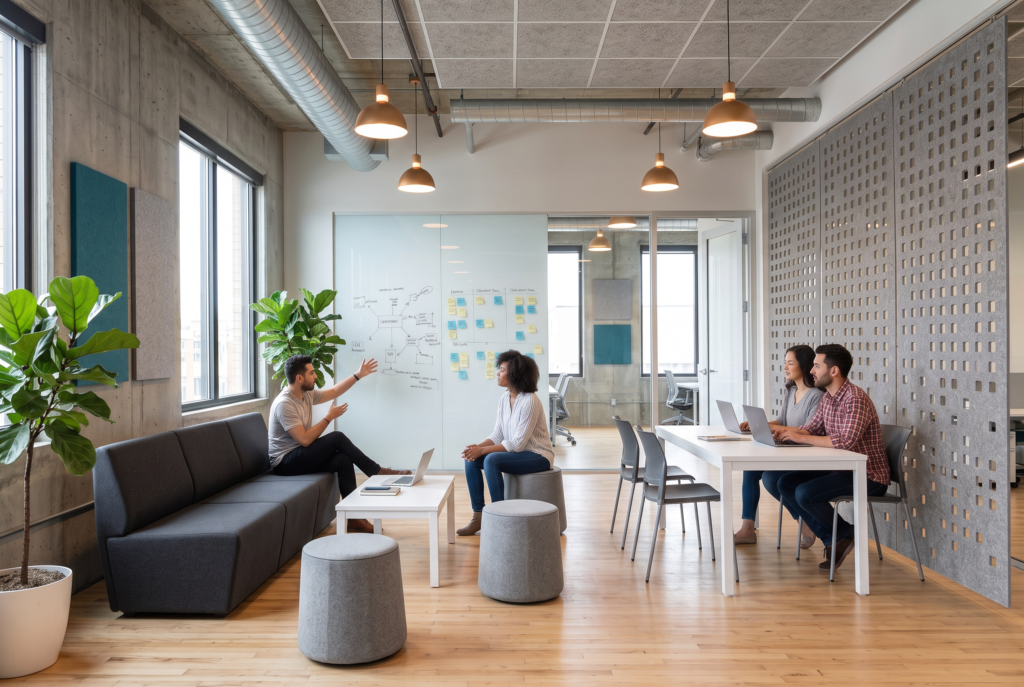
Open-plan offices need flexibility, but they also benefit from visual separation between work zones. Hanging acoustic panels offer an alternative to permanent walls. These decorative elements can help soften sound, introduce visual privacy, and define different areas without fully enclosing them.
They’re especially useful in:
- Open-plan workstations
- Collaborative lounges
- Reception areas
- Meeting spaces
- Flexible office layouts
For designers, hanging panels offer more than acoustic functionality. Patterns, repetition, and carefully selected finishes can transform them into architectural features.
The Versi Hanging Panels collection from Workspace48 features eight precision-cut patterns designed to combine visual interest with sound-absorbing properties.
3. Create Dedicated Zones for Different Activities
Not every area of an office needs the same acoustic treatment. A collaborative workspace might encourage conversation, while nearby focus areas require fewer distractions. One of the most effective approaches to acoustic office design is to organize the workplace around different activities.
- Focus zones: Areas designed for concentrated individual work.
- Collaboration zones: Spaces where teams can interact freely.
- Meeting zones: Rooms that support comfortable conversations and clear communication.
- Transition areas: Shared spaces that help separate quieter and more active environments.
Furniture layouts, privacy screens, and acoustic treatments can work together to establish these zones. The result is a workplace that feels connected while offering employees more control over their surroundings.
4. Choose Materials That Balance Performance and Aesthetics
Acoustic solutions should feel like an intentional part of the overall interior design. Materials, finishes, textures, and colors all influence how a workspace looks and feels. PET felt and other polyester-based materials are increasingly useful options for designers looking to add softness and texture to contemporary office interiors. Depending on the product and its tested performance, acoustic felt can also help absorb sound and reduce reverberation. For projects with sustainability objectives, material composition and end-of-life considerations are worth evaluating.
For example, Workspace48’s Versi Wall Tiles contain 50% recycled content and are made from recyclable polyester.
When selecting materials, consider their acoustic test data, durability, installation requirements, and compatibility with the overall design concept.
5. Make Acoustic Features Part of the Design Story
Acoustic elements don’t need to disappear into the background. They can become defining features that give a workplace personality.
A geometric feature wall can reinforce a company’s visual identity. Suspended panels can introduce rhythm and movement to an open space. Coordinated finishes can tie acoustic treatments together with seating, workstations, and other furniture.
For commercial interior designers, this presents an opportunity to solve practical challenges while creating memorable spaces.
The key is to integrate acoustic elements early in the design process rather than treating them as last-minute additions. Combining wall treatments with hanging panels can help create a cohesive visual language across different areas of a commercial workplace.
For projects requiring specific acoustic performance, always review tested sound absorption data and consider the complete room design.
Explore Acoustic and Decorative Solutions from Workspace48
Whether you’re designing a collaborative office, refreshing a reception area, or creating a statement feature wall, explore how the Versi collection can support your next commercial interior project.
Design First. Delivered Faster.